
Dipping Into Molise
Celebrating Italy's most neglected region, and a recipe for Funnateglie, aka Sausages, Peppers, and Eggs from my Molisana friend Tania

Saluti! Welcome to the latest installment of Abruzzo in Tavola, which this month is devoted not to Abruzzo but to its neighbor Molise. As I wrote when I introduced this series a few months ago, one of my aims this year is to spend a little time each month exploring these two regions where my family is from.
This week’s featured recipe, available to paid subscribers, is U Funnateglie, a traditional one-dish meal from Molise of sausages, peppers, and eggs.
Avanti! On to the newsletter.
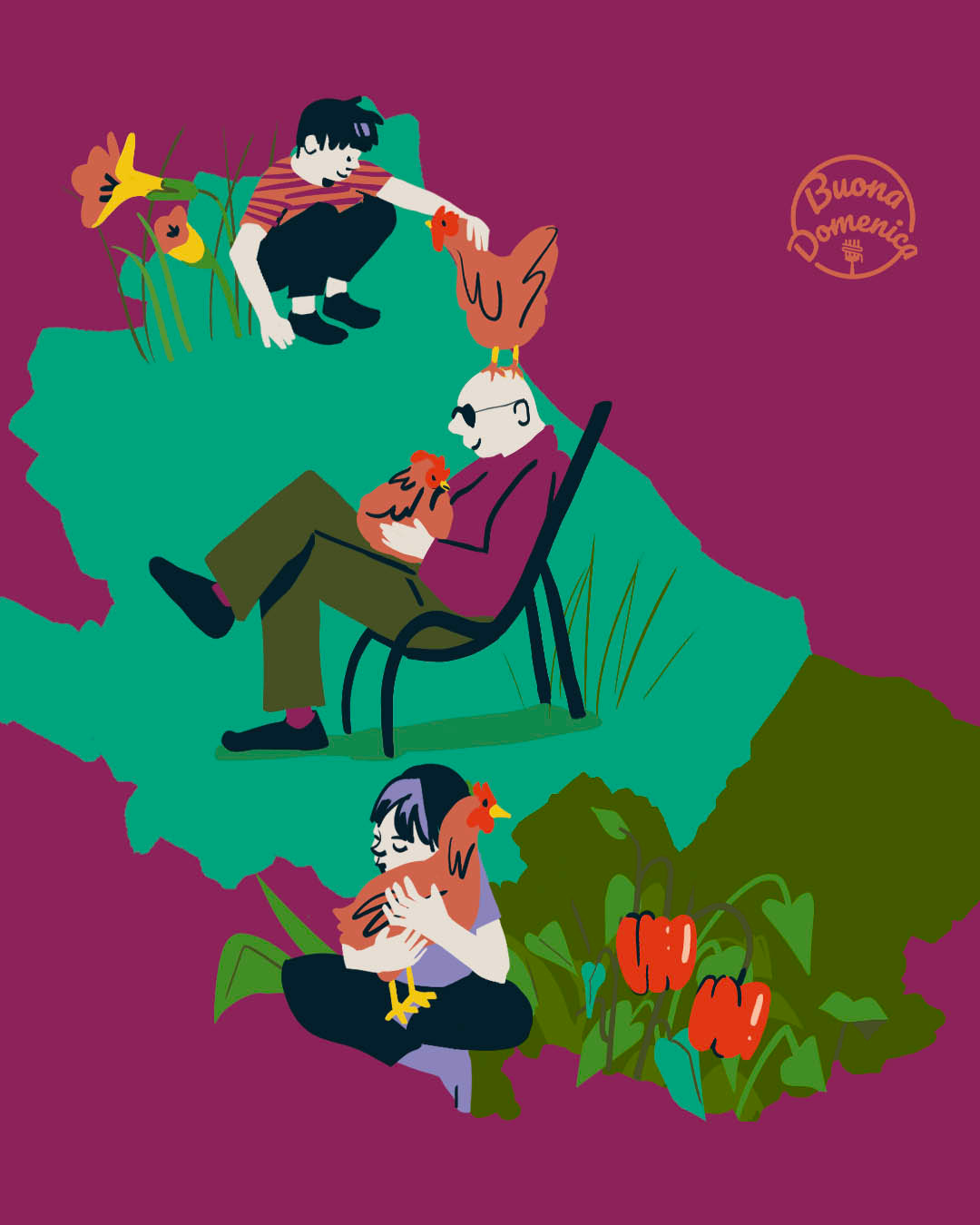
Most of you know that my heart is in Abruzzo, the region where my mother was born and raised, the place I spent my summers growing up, and the place I go to get inspiration and to get away.
Just to the south of Abruzzo lies another region in which I have family ties, these on my father’s side: Molise. This small region about the size of Rhode Island was once part of Abruzzo—the two regions together were known as “gli Abruzzi.” In 1963, Molise went rogue and became its own distinct region in a bid to control its own future, specifically economic growth. It remains physically and culturally tied to Abruzzo, as well as Campania and Puglia, the other two regions it borders. But it is also distinct.
During my childhood, trips to Molise were limited to a once-a-year visit to the city of Isernia to spend the day with my dad’s elderly Zio Gino and Zia Maria, and Gino’s sister, Zia Anita, who lived with them. Gino and Anita were my paternal grandmother’s siblings, and Maria was Gino’s wife. Mostly what I remember from those visits is how interminable they felt, cooped up in the trio’s apartment, the many age spots that speckled Zio Gino’s skin, and Zia Anita’s snaggle-toothed smile and crossed eyes. They were wonderful and kind people, but these are the sorts of details that stick with a young, bored child.
So, I didn’t truly “see” Molise until just a few years ago, when Scott and I drove across the region on our way from Abruzzo to Campania. I was bowled over at how green it was. It seemed that for most of the drive we were surrounded by forested mountains and countryside. Humming along one road, we came upon a handwritten sign for homemade biscotti, with an arrow pointing down a long gravel driveway. We followed it and came away with a bagful of rustic jam-filled cookies.
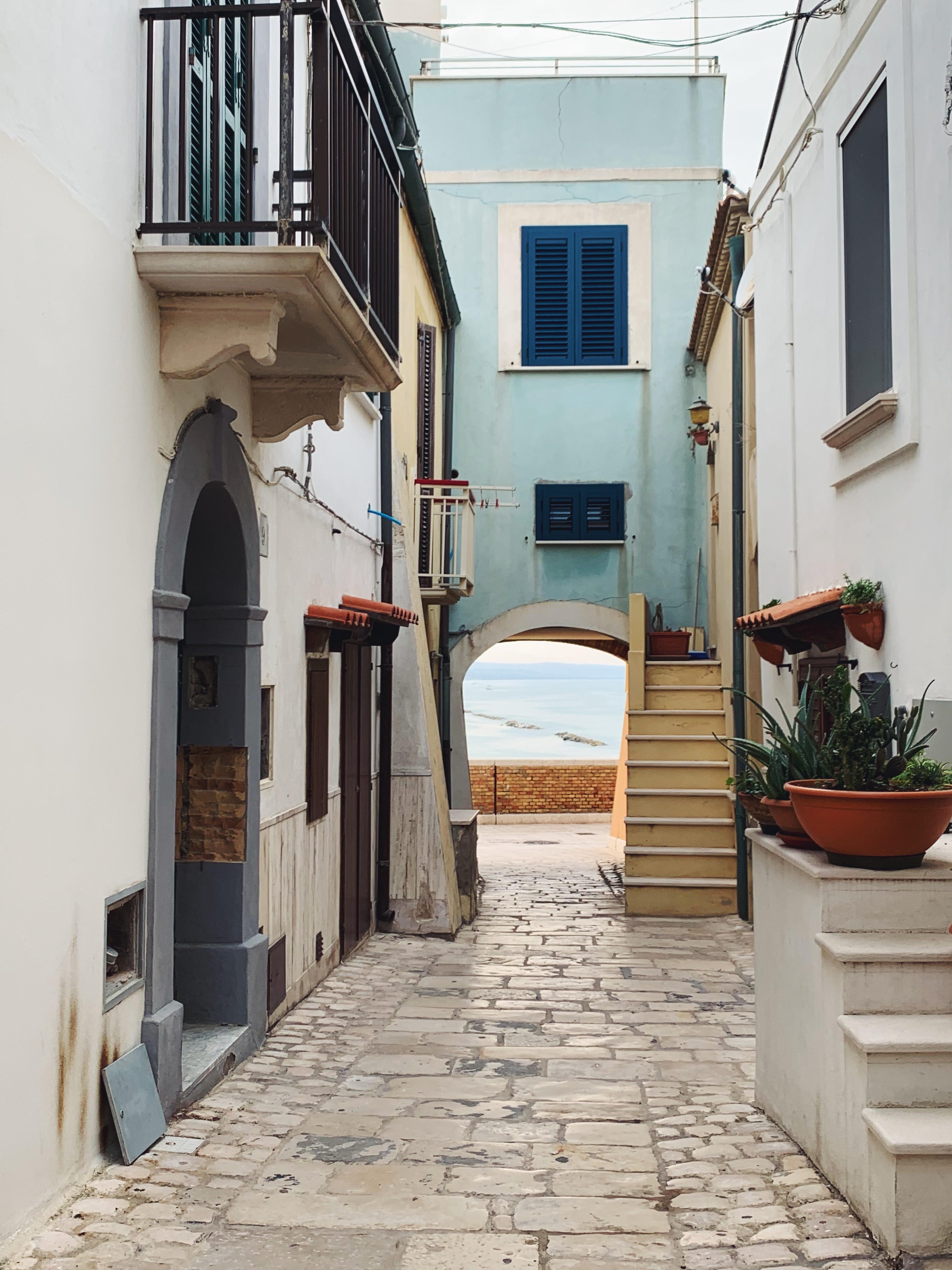
In 2022, we spent a few days in Termoli, a picturesque seaside town with a 13th Century castle, a whitewashed borgo antico (old town) with polished cobbled streets, and a bustling port and city center. Last January, we went to Campobasso, the region’s capital, which is less than a 3-hour drive from our home in Penne. The city is graced by a 15th century fortress and the 11th century Romanesque Chiesa di San Giorgio; it’s highly walkable, and has some good to excellent restaurants. Campobasso is surrounded by mountains and during our weekend stay we explored a couple of nearby ancient hilltop towns. I could tell we had hardly scratched the surface, and I can’t wait to return.
A FEW FACTS ABOUT MOLISE
At 1,714 square miles (4,438 sq km), it is Italy’s second-smallest region after Valle d’Aosta.
Population: 286,000
Provinces: Campobasso and Isernia
Capital: Campobasso
Economic landscape: Agriculture, farming, food processing, eco-tourism
THREE THINGS MOLISE IS KNOWN FOR
Cow’s milk pasta filata (stretched curd) cheeses, including scamorza from Campobasso and caciocavallo from Agnone.
Pontificia Fonderia Marinelli: This bell foundry, located in the town of Agnone, dates to the 11th Century. It is the official producer of church bells for the Vatican.
Archeological park of Sepino, the ruins of an ancient Roman town in the mountains south of Campobasso.


IL MOLISE ‘NON ESISTE’
“Il Molise non esiste,” or “Molise does not exist,” is an expression that went viral on social media during the 2010s. It began as a hashtag, a way of poking fun at this small, sparsely populated region that has remained underrated and under the radar. Instead, the Molisani decided to embrace it, framing the taunt as a point of pride and evidence that whoever says it has no idea what they’re missing.
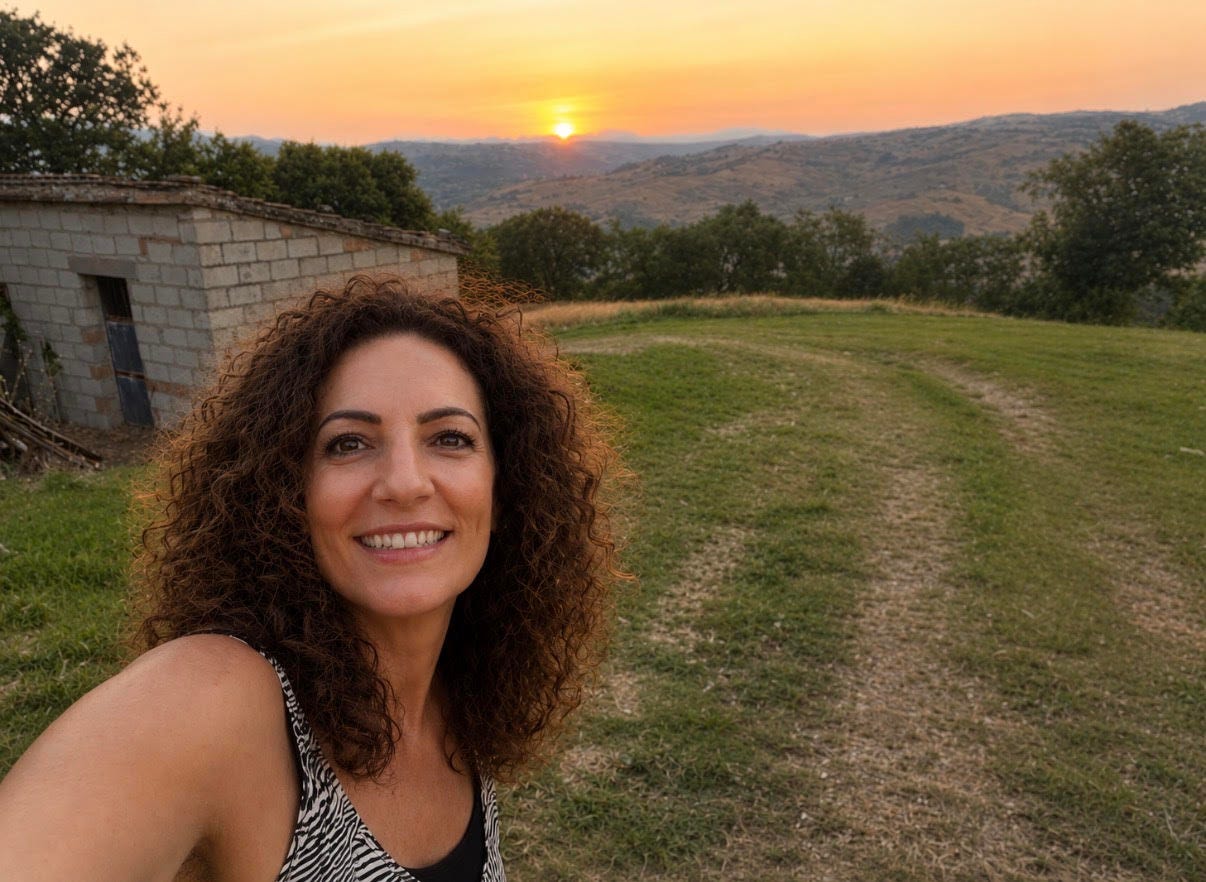
I plan to do a lot more exploring and writing about Molise, but I am still a newbie. So, for additional insight, I turned to my friend Tania Pietracatella. Tania is an Italian-Australian whose roots are in Campobasso. She runs a language school in Perth and leads small-group tours in Molise. We “met” years ago on Instagram, and are hoping our paths will one day cross there in real life. You can find Tania on Instagram (@the_little_italian_school), where she posts photos and videos of her travels and her Molisana recipes, among other things. Tania kindly answered some questions about her region. And she shared her recipe for a classic Molisana dish called U Funnateglie, a one-dish meal of peppers, sausages, and eggs.
BUONA DOMENICA: Ciao, Tania. You were born in Perth and are married to a Molisano. You have deep roots in the region. Tell us about how your family ended up in Australia from Italy, and about your own journey ‘back’ to Molise to find your roots.
TANIA PIETRACATELLA: My nonni from Molise came to Australia after World War II. My paternal side is from Molise and maternal from Calabria, but in Calabria none of our family stayed after the war. Instead, on my father’s side we still had a lot of immediate family in Campobasso. So, when I was 12 my father took us back to meet them, and I have returned every year since then.
Arriving in Rome was great, but the minute we arrived in Campobasso and met our family I immediately felt I was where I belonged. I felt a sense of identity that was nonexistent in Australia. Everything felt familiar. I bonded with my cousins and to this day we are still so close – with one in particular—we are more like sisters than cousins. I no longer felt like a fish out of water like I did in Australia. I felt like I belonged.
I also did some university studies in Perugia when I was 17, and at age 22 I went back to Campobasso to live for a few years and that’s when I met my now-husband. When we decided to start a family, we came back to Australia where there is more opportunity for our children.
BD: You run a language school called The Little Italian School. Tell us about it and its connection to Molise.
TP: Before I had children, I taught Italian in primary schools in Australia. One summer, while sitting in front of the family farmhouse in Molise, I looked at the small white one-room building beside the farmhouse, which was my father’s old school (and also became my school’s logo), and thought: I could open the same kind of thing in Australia with a similar feel. Something less formal than a sterile classroom, where I could teach our Italian language. At the time, there was also that generation of Italians who had sacrificed so much but were never really recognized for it. So opening my school was also a way to honor my grandparents and parents and keep the Italian language and culture alive. And it worked.
BD: There’s a saying: “Il Molise non esiste,” or “Molise does not exist.” It is a comment on Molise’s relative invisibility compared to more prominent regions that seem to command more attention. But the Molisani seem to have appropriated the expression and wear it like a chip on their shoulder. What is your take on this expression? Do you see it as derogatory or something to embrace?
TP: I remember when it was said in not such a nice way, but I also remember secretly thinking “Good, I hope it stays that way so it doesn’t get spoilt like other Italian regions have.” Especially after having visited Florence this year. I hadn’t been back to Florence since the late 80’s early 90’s, and that place really no longer exists. It was very sad, actually.
So to answer the question: I feel the ‘Molise non esiste’ title we have inherited is something to embrace! We really are Italy’s best kept secret. It’s a little gem!


BD: All of Italy’s regions have a specific identity, or at least popular associations. Tuscany is the cradle of the Renaissance; Piedmont is wine and cheese country; Lazio is Rome, ancient history, and the Colli Romani; Abruzzo’s mottoes are ‘forte e gentile’ (strong and kind) and ‘mare e monti,’ (sea and mountains). Campania is Naples, the Vesuvio, the Amalfi Coast. What is Molise’s identity, in your opinion? What, if anything, do people associate with the region? What would you like them to know?
TP: Well, ‘Mare e Monti’ is also Molise. We have the mountains and the Adriatic sea. Termoli is one of the cutest seaside villages. We also have ancient ruins—Molise was the home of the Samnites [an ancient Italic people who dwelt in the Apennines and fought brutal wars against the Roman Republic in the 3rd century BC]. There’s a paese called Sepino where nearby you can find the Sepino Archeological Park, which was a Roman town. We are the original home to the well-known Caciocavallo cheese, which is tied to the 1,000 year old ‘Transhumance’ tradition, which is the trek of the shepherds between Molise and Puglia when they move the livestock to graze as the seasons change. We are the major Italian truffle region producing approximately 40% of the country’s supply. We also have the historic bell foundry who have been passing down techiniques for over 1,000 years and supplying the worlds churches with bells for centuries.
But the most wonderful thing about our region is that mostly Italian is spoken wherever you go, local businesses are owned and run by locals, and because of the shortage of tourists, locals are happy to see you if you visit!
BD: Let’s talk about the food of Molise. Even Italian cookbooks seem to give it short shrift, forever grouping it with Abruzzo. I definitely see similarities between la cucina Abruzzese and la cucina Molisana—the use of lamb, pallotte cacio e uova, caciocavallo cheese, hearty meat dishes and ragùs, seafood on the coast. But surely they are also distinct. What defines the food of Molise? Is peperoncino as much as a staple here as it is in Abruzzo?
TP: Being such a small region, I feel we have influences from our bordering regions of Abruzzo, Lazio, Campania and Puglia. But the most prominent dishes would be Cavatelli con Carne di Porco (cavatelli pasta with pork ragù), pallotte cacio e uova (cheese and egg ‘meat’balls), Pizz’ e Minestra (greens with cornbread), torcinelli (lamb offal), u funnateglie (sausage, egg, and peppers) and la pampanella (slow-cooked pork spiced with ground sweet and hot peppers). And of course along the coast we have the popular zuppa di pesce (fish stew). Peperoncino is more give or take, not so much a staple.


BD: What are some of your favorite dishes from Molise?
TP: The one that comes to mind straight away is Cavatalli col Sugo di Maiale. I think it’s served in almost every home for Sunday lunch.
In Campobasso you will also find an historic family of bakers called Palazzo who have been baking bread and pizza for the community for over a hundred years. As soon as we arrive each year it’s the first place we head to for a fix of pizza. The smells and flavours send me into a flood of childhood memories with every bite.
Like many southern Italian tables, vegetable dishes are the main character. ‘Contorni’ (side dishes) are usually my favourite. Anything with greens, potatoes, beans, chickpeas, zucchini, paired with lots of bread are what I love best. We do amazing ‘antipasti’ in Molise.
BD: Is the food scene in Molise changing? When my husband and I were in Campobasso last winter, we had a couple of very good meals, including one place where I had an amazing entrée of rolled boneless lamb stuffed with chestnuts. I’m wondering if the restaurant scene is on the rise in Campobasso and other places in the region?
TP: Molisani are very proud of their cuisine. There have always been top quality restaurants in the region, but to find these little hidden gems you’d have to know a local! Not only are there many in Campobasso but there are also many in the surrounding paesi, including lots of agriturismi, and they serve only produce grown on their land. Molisani are very generous too. When I took a small group of my Italian students for a tour one July, they were embraced and spoilt by everyone in every bar and restaurant we went to.
BD: Tell us about the wine scene in Molise. What are some grapes and wines from the region? I’m particularly interested in Tintilia, but really anything, as I don’t think the wines are well known.
Tintilia is a grape from Molise. It gets its name from it’s rich colour. ‘Tingere’ means ‘to dye’, hence the name Tintilia. I have never seen it in a bottle shop in Australia. I don’t think they produce enough to share it with the rest of the world.
Another grape variety is Falanghina, which is a white grape. I’m not too clued up on wines but I do know that you can still buy wine from the local ‘contadino’ (farmer) at really good prices. Sometimes it’s cheaper than water!
BD: Thank you for this enticing glimpse of Molise, Tania!
* * * * * * * * * *
READERS: Have you been to Molise? Or, if not, do you have a favorite ‘undiscovered’ part of Italy?
RECIPE: U Funnateglie (Sausage, Peppers & Eggs)
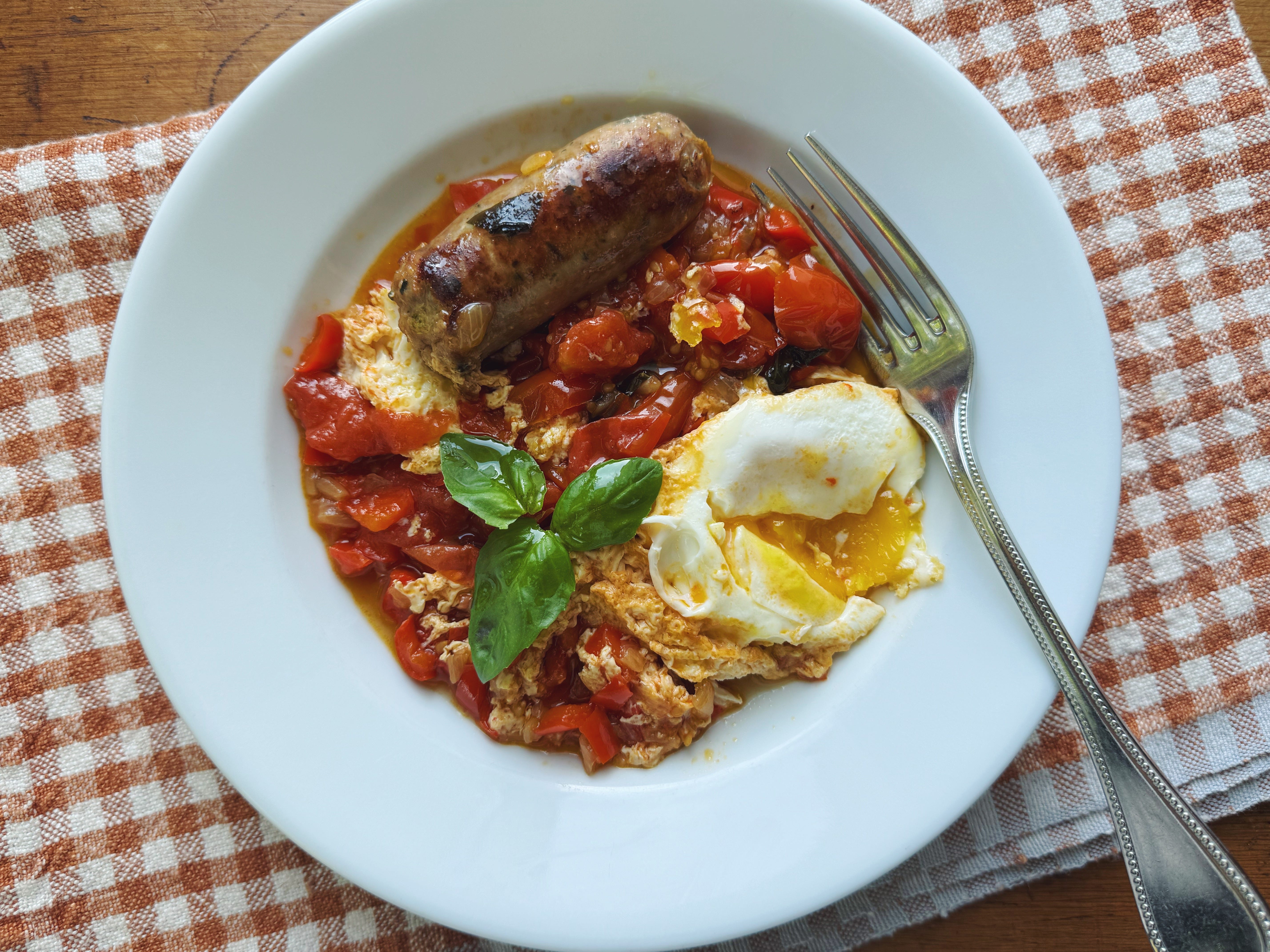
I love the combination of peppers and sausage, as well as the combination of peppers in eggs. But I never thought to put them together in the same dish. It’s typical of la cucina Molisana—rustic and hearty and full-flavored—and it makes for an especially satisfying one-dish meal. The name ‘funnateglie,’ pronounced ‘foo-na-TELL-lieh,’ is derived from the word ‘affondare,’ which means to immerse or sink, as in immersing bread in the rich sauce that the dish produces. I’ve slightly adapted the recipe of my friend Tania Pietracatella.
Click on the button below for the full, printable version of the recipe, available to paid subscribers.
Cookie Book Updates & Tasty Links
Italian Cookies continues to make the rounds of the podcast, radio, print, and video-verse. Here are links to recent appearances and press:
Domenica Marchetti’s new cookbook offers recipes for every great Italian cookie (Boston Globe).
Kitchen Treasure Hunt, with Amateur Gourmet’s Adam Roberts, in which I spill all (or many) of my kitchen secrets.
Everything Cookbooks: This podcast covers the many facets of cookbook writing. I talked with hosts Kate Leahy and Molly Stevens about finding a niche in the crowded field of Italian cookbooks.
Cookbook Love Podcast: I spoke with host Maggie Green about the many stories behind Italian cookies (and Italian Cookies).
Mangiare Il Biscotto: A chat with Guy Bower, host of The Good Life podcast.
UPCOMING EVENTS
Thursday, May 21, 1 p.m.: I’ll be live on Substack with fellow cookbook author Irina Georgescu. We’ll be baking from Italian Cookies! Stay tuned for a link to join the session live.
Thursday, May 28, 7 p.m.: PRINT Bookstore, Portland, ME. I’ll be in conversation with fellow food writer (and my writing workshop partner) Kathy Gunst. There will be cookies!
Saturday, June 13, 4 p.m.: Save the date! Join me for an Italian Cookies reception at IAMDC, the Italian American Museum of Washington DC. Details to come.
Saturday, June 20, 2 p.m.: Save the date! I’ll be teaching a special online cookie class in collaboration with QB Cucina. Details to come.
I am finalizing plans for a midwest swing in mid-July that will take me to Chicago, Milwaukee, and…??? Stay tuned!
THANK YOU to all who have purchased Italian Cookies. I hope you are loving it! If you haven’t yet, please consider leaving a review of the book. Reviews lend credibility and legitimacy to the book; they give it the visibility it needs to keep the momentum going. Grazie!
And thanks, as always, for reading, subscribing, and sharing.
Alla prossima,
Domenica
We go to Molise quite often because it’s so close to where I’m from, in northern Puglia. People from my hometown often go to Termoli — the town and beach is pretty nice, and they are famous for brodetto. As a child I used to go to Bagnoli del Trigno because my aunty’s mom was from there. It’s a beautiful, very quiet little town. I have great memories of my time there.
I loved reading about Molise -- the Giro just passed through it the other day, and the commentator mentioned the joke in Italy being "yes, Molise does exist!". I really hope to spend more time in Italy in the coming years, and especially areas that are "lesser known", and Molise is one of those :)